
Federal, State, Local, and HOA Rules: Know Your Rights
Bird protection in California comes from several different layers: federal law, state law, county and city ordinances, and whatever your HOA's governing documents say.
They don't always agree, and knowing which one applies can save you a difficult conversation with a neighbor, a landscaper, or a board.
Federal Law: The Migratory Bird Treaty Act
The Migratory Bird Treaty Act (MBTA) makes it illegal to pursue, hunt, capture, kill, or sell a protected bird, and that protection extends to active nests and eggs, not just live birds. It covers more than 1,000 native species, common and rare alike.
Eagles have more legal protection than any other bird group in the country under the Bald and Golden Eagle Protection Act, which makes it a separate federal crime to take, possess, or sell any part of a bald or golden eagle, including feathers found on the ground
See our Conservation page for the full picture, including how enforcement has shifted federally in recent years.
California State Law
California backs up the MBTA with its own protections, and in some ways goes further:
- Fish and Game Code §3503 makes it unlawful to take, possess, or needlessly destroy the nest or eggs of any bird, period, not just federally listed migratory species.
- Fish and Game Code §3503.5 adds specific protection for birds of prey (hawks, owls, falcons), their nests, and their eggs.
- The California Migratory Bird Protection Act, passed in 2025, makes it unlawful to take or possess a protected migratory bird under state law regardless of what happens at the federal level. This gives California birds a state-level backstop even if federal enforcement changes.
In practice, this means California residents have bird protection under state law even in situations where federal MBTA enforcement has weakened or become inconsistent.
County and City Rules
Local ordinances add another layer on top of federal and state bird protections, and in Thousand Oaks specifically, they're worth knowing about even apart from birds.
Oak tree protection
CVAS's territory spans several cities, and each regulates oak and protected trees a little differently. All of them require a permit before you remove or significantly alter a protected tree, but the size threshold and process vary:
- Thousand Oaks, including Newbury Park: every oak species over 2 inches in diameter is protected, along with certain large Sycamore, Black Walnut, Bay Laurel, and Toyon trees designated as "Landmark Trees." A permit is required for removal or for pruning or ground work within the protected zone (5 feet beyond the canopy or 15 feet from the trunk, whichever is greater).
- Simi Valley: all mature native oak trees (5 inches or more in diameter) are protected everywhere, including single-family yards. Other mature tree species are only protected outside single-family yards.
- Westlake Village: oaks over 4 inches in diameter (or 12.5 inches in circumference) are protected, and any removal or significant pruning requires a permit supported by a tree report from an ISA-certified arborist.
- Moorpark: native oak, historic, and other mature trees require a removal permit under the city's tree preservation ordinance.
- Unincorporated areas (parts of the Conejo Valley outside city limits) fall under Ventura County's own Tree Protection Ordinance, administered by the County Planning Division.
This matters for bird habitat directly: oaks are one of the most valuable tree species for local birds and insects, and removing or heavily pruning one without checking your city's permit requirement is a separate violation from any nesting-bird issue. If you're planning oak work anywhere in CVAS's territory, check with your city's planning or community development department before you start, in addition to checking for active nests.
Outdoor Lighting
Ventura County has adopted Dark Sky ordinances for the unincorporated Ojai Valley and Santa Monica Mountains areas, requiring shielded, downward-facing fixtures and defined "dark hours."
Thousand Oaks itself doesn't currently have a dedicated dark sky ordinance, though its ongoing LED streetlight upgrade uses shielded, downward-facing fixtures as a side benefit.
See our Windows and Night Lights page for what you can do on your own property, regardless of what your city requires.
Where State Law Overrides Your HOA, & Where it Doesn't
California has, in a few specific areas, passed laws that override HOA authority entirely. The two clearest examples:
- Solar panels, protected by the Solar Rights Act (Civil Code §714), which prevents an HOA from banning or unreasonably restricting solar installation.
- Drought-tolerant and native landscaping, protected by Civil Code §4735, which prevents an HOA from requiring turf or prohibiting low-water landscaping.
Bird-safe home features don't currently have that same statutory override. There's no California law that specifically prevents an HOA from restricting things like window decals, exterior films, screens, or exterior lighting choices on aesthetic grounds. If your HOA has architectural rules covering the exterior appearance of your home, those rules generally still apply to bird-safe treatments the same as anything else.
That said, HOAs aren't unlimited in what they can require. Under the Davis-Stirling Act, architectural guidelines have to be reasonable and specific (Civil Code §4765); an HOA can't deny a request based on a vague standard like "neighborhood harmony" without pointing to an actual written rule. If you're proposing something like small, low-profile window dot patterns or a shielded, downward-facing light fixture, it's worth submitting it through your HOA's architectural review process and asking what specific rule, if any, it would violate.
If Your HOA Schedules Yard Work During Nesting Season
This comes up often enough that we've written a dedicated resource on it, including a specific FAQ for what to do if your HOA's landscaping schedule overlaps with nesting season. See Bird-Friendly Tree Care for the full guidance, including how to raise it with your HOA or landscaping company.
What you can do
- Know which law applies. Federal MBTA and California Fish and Game Code both protect active nests; state law is currently the more reliable backstop.
- Check your HOA’s CC&Rs before installing anything visible from outside, including window treatments and light fixtures, and go through architectural review rather than around it.
- Ask for the specific rule, not just a general objection, if an HOA denies a bird-safe request. Under the Davis-Stirling Act, they're required to have one.
- Check for a city permit requirement, not just nesting activity, before removing or heavily pruning an oak or protected tree. Tree ordinances apply whether or not birds are nesting.
- Document active nests with a photo and date if you're asking an HOA or contractor to delay work, since that's the clearest way to demonstrate MBTA and state law apply.
- Report suspected violations to the California Department of Fish and Wildlife's CalTIP line (1-888-334-2258) or the U.S. Fish & Wildlife Service tip line (1-844-397-8477).
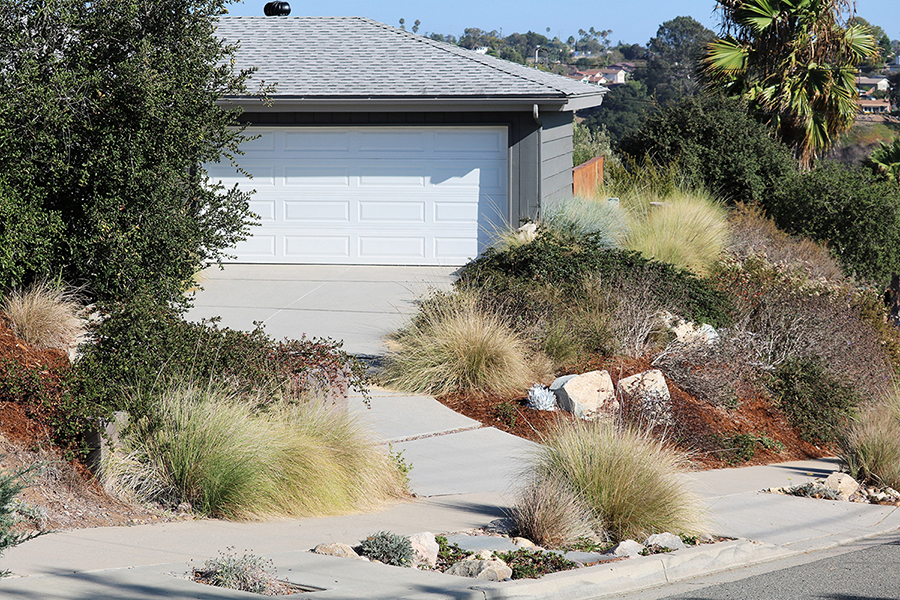
Photo Courtesy of California Native Plant Society, Calscape