
Protecting Birds from Windows and Night Lights
Window collisions and light pollution are really two halves of the same problem. At night, artificial light draws migrating birds off course and into unfamiliar territory.
By day, the windows in that same landscape become invisible walls. Both are among the most common, and most fixable, threats birds face in a place like the Conejo Valley and beyond.
How Windows Harm Birds
Collisions with glass kill over a billion birds a year in the U.S., and research suggests even that estimate is conservative, once you account for birds that survive an initial strike but die later from their injuries.
Homes account for roughly as much of that toll as office towers and skyscrapers combined, simply because there are so many more of them. If you have windows, you likely have a bird collision risk, whether or not you've ever found evidence of one.
Birds don't understand glass. A window that reflects sky or trees looks like open space to fly through, and a window that looks straight through to a houseplant or a yard on the other side looks like a clear path. Collisions happen at any hour, but they spike at dawn and dusk during spring and fall migration, when more birds are moving through and stopping to rest.
How to Prevent Window Strikes
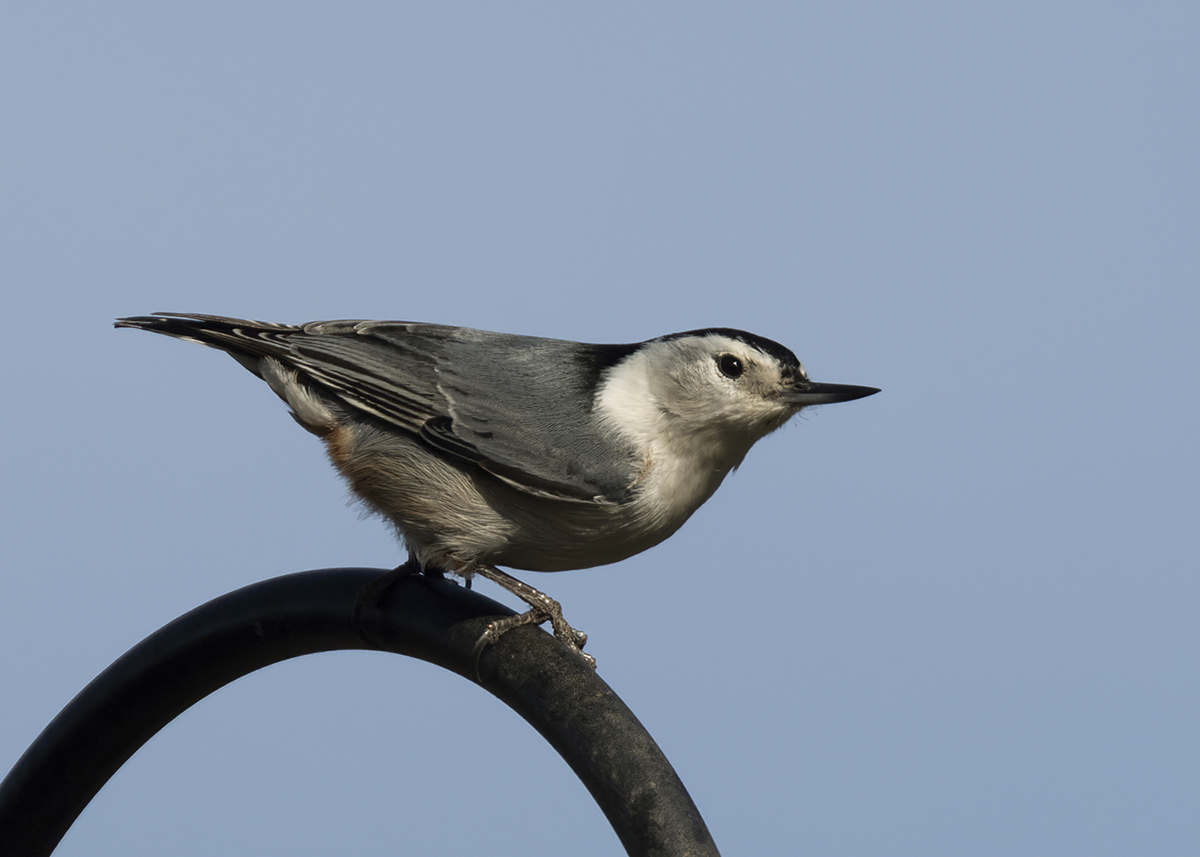
- Follow the 2x4 rule. Any pattern applied to the outside of your glass, decals, dots, tape, or paint, needs gaps no larger than 2 inches high by 4 inches wide (2x2 if you want to protect hummingbirds and other very small birds too). A bird will try to fly through any gap it thinks it can fit through, so a few scattered decals on a large window do essentially nothing. Full coverage is what matters.
- Put it on the outside, not the inside. Treatments applied to interior glass don't break up the reflection birds are reacting to.
- Consider purpose-built products. Companies like Feather Friendly and ABC BirdTape make dot or line patterns designed and tested specifically for this spacing, and they hold up better over time than DIY tape or paint. The American Bird Conservancy maintains a tested product database if you want to compare options.
- External screens work well. A standard insect screen installed outside the glass breaks up the reflection and cushions the impact if a bird does hit it. This is one of the simplest fixes if your windows already have screen tracks.
- Skip the single hawk decal. It's one of the most persistent myths in bird-safe design. A single silhouette anywhere on a window leaves the rest of the glass just as invisible as before.
- Don't rely on closed blinds or curtains alone. They can help if the underlying problem is a bird seeing through to a houseplant, but they don't stop a bird from reacting to a reflection on the glass itself, which is the more common cause of strikes.
Feeders don't need to be moved far from windows to solve this. Current guidance from ornithologists is the opposite of the old advice: keep feeders either right against the glass (so a bird can't build up much speed before a potential strike) or well away from the house, and focus your effort on making the window itself visible rather than moving the feeder around.
Light pollution and bird migration
More than 80% of migrating birds travel at night, navigating in part by starlight and the night sky. Artificial light disrupts that. Bright lights can pull birds off their route and draw them toward cities and buildings, where they burn energy circling in confusion, and where they're far more likely to collide with something once daylight returns.
BirdCast, a migration-forecasting project from Cornell Lab of Ornithology, tracks nightly bird movement using weather radar and issues alerts for the busiest migration nights so people know exactly when turning off lights matters most.
The Conejo Valley sits along the Pacific Flyway, one of the continent's major migration routes, so this isn't a distant-city problem. Spring migration runs roughly mid-February through mid-June, and fall migration runs roughly August through November, with the heaviest nights concentrated in a few peak weeks within each season.
What helps birds during migration
- Turn off non-essential outdoor lighting from 11 p.m. to 6 a.m., especially during peak migration weeks. Porch lights, landscape lighting, and unused security lights are usually the easiest to switch off without giving up anything you actually need.
- Shield and aim lights downward. A light that's fully shielded and pointed at the ground does its job without spilling into the sky, where it can be seen by birds flying far overhead.
- Use motion sensors instead of dusk-to-dawn lighting for security purposes. You get the safety benefit without the light running all night.
- Draw curtains at night if you have bright interior lighting and large windows, particularly during migration season.
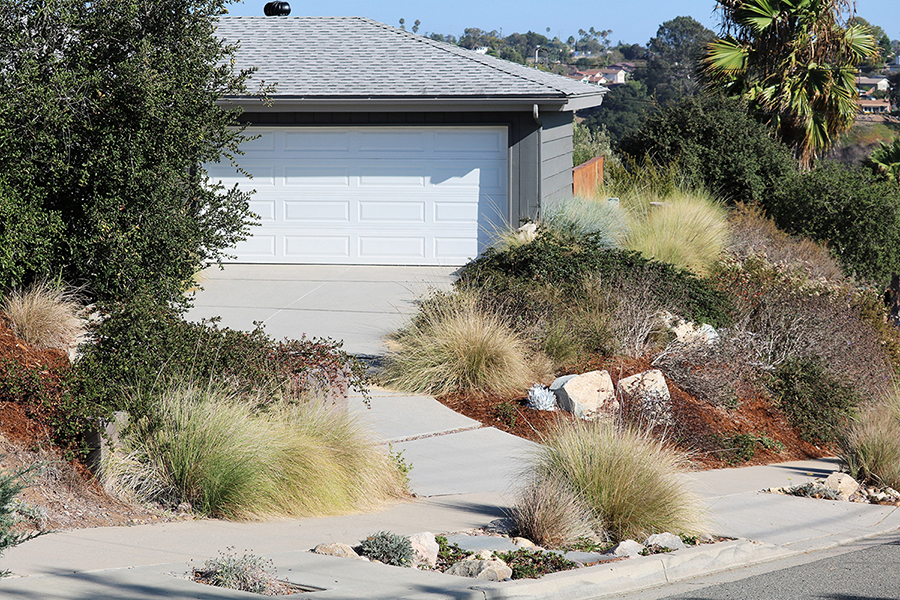
Photo Courtesy of California Native Plant Society, Calscape
Ventura County has already adopted formal Dark Sky ordinances for the unincorporated Ojai Valley and Santa Monica Mountains areas, requiring shielded, downward-facing fixtures and set "dark hours." Thousand Oaks itself doesn't yet have a dedicated dark sky ordinance, though the city's current streetlight upgrade to shielded LED fixtures is a step in that direction, even if it wasn't adopted for that reason. In the meantime, the steps above are things any household can do on its own, no ordinance required.
BirdCast, a migration-forecasting project from Cornell Lab of Ornithology, tracks nightly bird movement using weather radar and issues alerts for the busiest migration nights so people know exactly when turning off lights matters most.
The Conejo Valley sits along the Pacific Flyway, one of the continent's major migration routes, so this isn't a distant-city problem. Spring migration runs roughly mid-February through mid-June, and fall migration runs roughly August through November, with the heaviest nights concentrated in a few peak weeks within each season.
Resources
- Frequently Asked Questions
- Glass collisions overview (American Bird Conservancy)
- Glass solutions, including retrofits for existing windows, (Stop Bird Collisions)
- Reducing collisions with glass (National Audubon Society)
- Bird Friendly Home Toolkit (U.S. Fish and Wildlife Service)
- Lights Out program (National Audubon Society)
- Light and landscape solutions (Stop Bird Collisions)
- New lighting recommendations (American Bird Conservancy)
- Turn lights out (Cornell Lab BirdCast)
- Pacific Flyway (National Audubon Society)
- Responsible outdoor lighting (Dark Sky)