
Keeping Birds, Cats, and Local Wildlife Safe
A catio (short for "cat patio") is an enclosed outdoor space that lets a cat experience fresh air, sunshine, and the sights and smells of the outdoors, without the risks of roaming free. It's one of the simplest changes a household can make that's good for birds and good for the cat.
The Stakes for Birds and Cats
Free-roaming cats are the single largest human-caused source of bird mortality in the U.S., ahead of window strikes, vehicles, and every other human-caused factor combined. That's not a knock on cats, it's just what happens when a skilled natural predator has unrestricted outdoor access to a landscape full of nesting birds.
It's not one-sided, though. The outdoors is dangerous for cats too. Indoor cats live an average of 10 to 15 years, according to research out of UC Davis, while free-roaming cats average only 2 to 5. Vehicles are the leading cause of death for outdoor cats, and here in the Conejo Valley, resident coyote and bobcat populations, along with great horned owls and red-tailed hawks, all pose a real risk to a cat left outside unsupervised.
A catio gives your cat the enrichment of the outdoors while removing nearly all of that risk in both directions: birds are safe from the cat, and the cat is safe from cars, predators, and disease exposure from other animals.
Types of Catios
Catios scale from small and simple to elaborate, and there's a workable option for almost any home:
- Window box catios are the smallest and most affordable option. They mount directly to an existing window using support braces, giving a cat a screened-in perch to watch the yard without taking up any floor space. This is the easiest starting point for renters, apartments, or anyone testing the idea for the first time.
- Cat tunnels are narrow, elevated, screened runs, often used to connect a window or cat door to a larger enclosure elsewhere in the yard. They're a good way to route a cat safely across a patio or along a fence line.
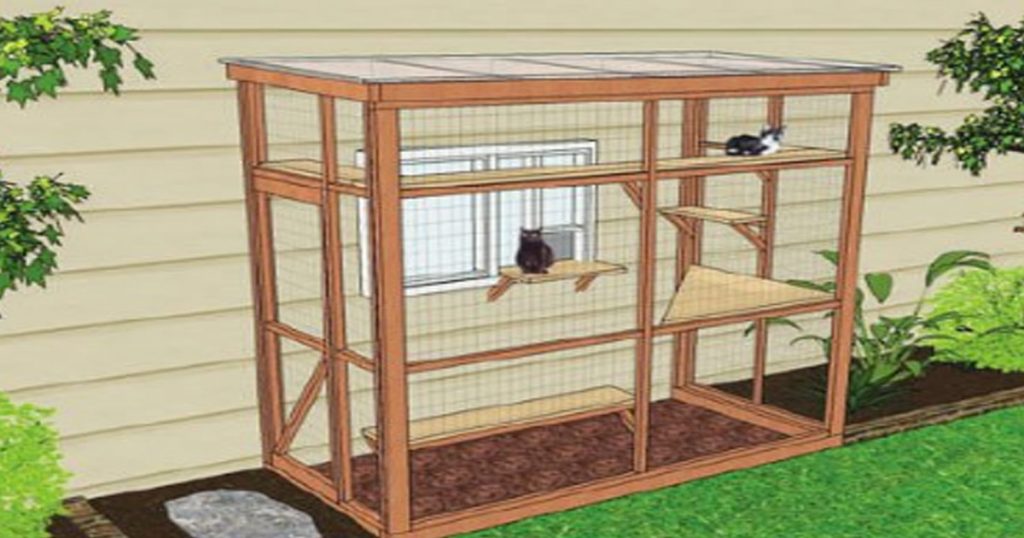
- Freestanding catios (3-sided, attached to the house, or 4-sided and fully standalone) offer the most room to roam, climb, and lounge, and larger designs often include space for a human to sit inside with the cat. These typically connect to the house through a cat door in a wall, window, or door.
Building a Catio
You don't need to be a professional carpenter to build a catio, though all three routes below are legitimate depending on your budget and time:
- DIY from a plan set: downloadable plans typically run $40 to $70, with materials from a standard lumber or home improvement store adding roughly a few hundred to $1,500 depending on size. This is the most budget-friendly route if you're comfortable with basic tools.
- Kits: pre-cut, pre-measured panels that ship to your door and assemble in a day. More expensive than a plan set but faster and more forgiving for a first build.
- Custom-built: a hired designer or contractor builds to your yard and vision. Costs vary widely, from roughly $2,500 for a simple window catio up to $30,000+ for elaborate multi-structure setups with connecting tunnels.
A few design details worth getting right:
- Use small-gauge, escape-proof wire mesh (roughly 1"x1" or smaller) rather than standard chicken wire, which a determined cat or a raccoon can bend or tear.
- Include a secure latch, and consider a double-door "airlock" entry if the catio opens directly to the outdoors, so a cat can't dart out when you go in to clean or refill water.
- Balance sun and shade. A polycarbonate roof panel over part of the space provides weather protection; leaving another section open mesh keeps airflow good in our summer heat.
- Add vertical space. Shelves and perches let a cat climb and survey its territory, which is most of the enrichment value of the space.
- Keep any plants inside the catio non-toxic to cats, and skip a permanent litter box inside as a full replacement for an indoor box, a small attached litter box for convenience is fine, but cats should still have indoor litter access.
Share your Catio
CVAS is building out a photo gallery to show the range of what's possible, from a simple window box to an elaborate multi-room build. If you have a catio and are willing to share photos for our educational materials, please email them to catios@conejovalleyaudubon.org.
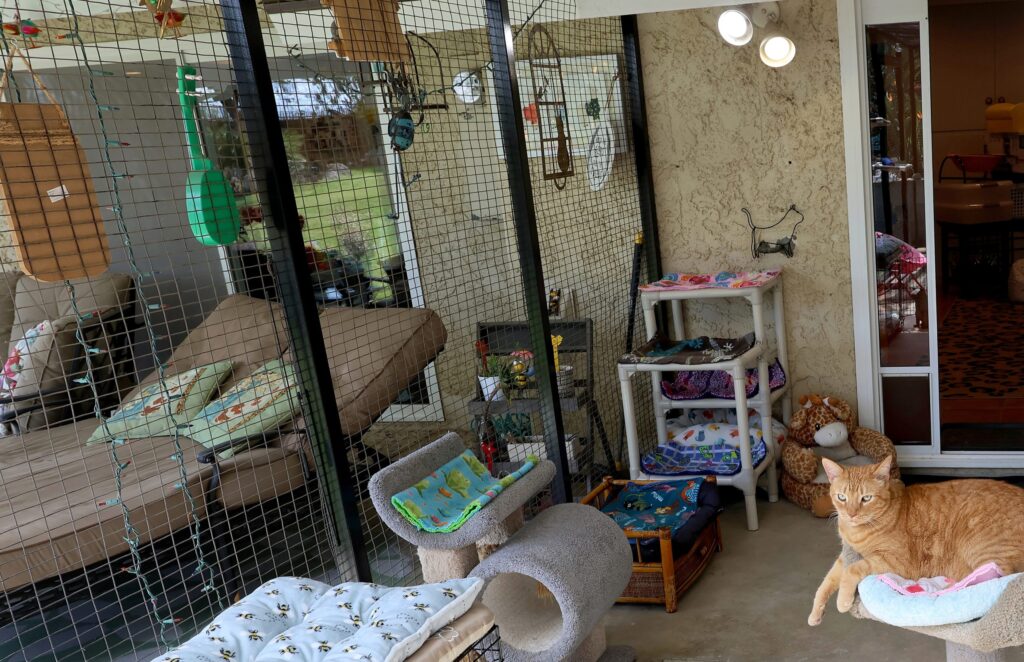
Whisker Wonderland Catio ©CVAS